



Natural Language Test Automation: How Plain English Becomes a Runnable Test
Learn with AI
"Describe your test in plain English and we will automate the rest" is not a new promise. Some version of it has been on testing tool feature pages since keyword-driven frameworks, and most QA teams who took it seriously came away with a folder of half-working scripts and a durable suspicion of the whole category.
What changed is the layer doing the interpreting. Large language models are genuinely good at turning a loosely worded instruction into a plausible sequence of test steps, and over the past two years researchers have started publishing numbers on how often that sequence is actually correct. The short version: more often than the last generation of tools managed, and not often enough to skip review.
If you are evaluating a platform that advertises natural language authoring, the mechanism underneath is what you are buying. This is how that mechanism works, what the evidence says about its reliability, and where it still fails.
THE SHORT ANSWER
Natural language test automation, at a glance:
• Three different capabilities get sold under this one label: plain-language authoring, NLP-based element identification, and LLM agents that interpret steps at runtime. They fail in different ways.
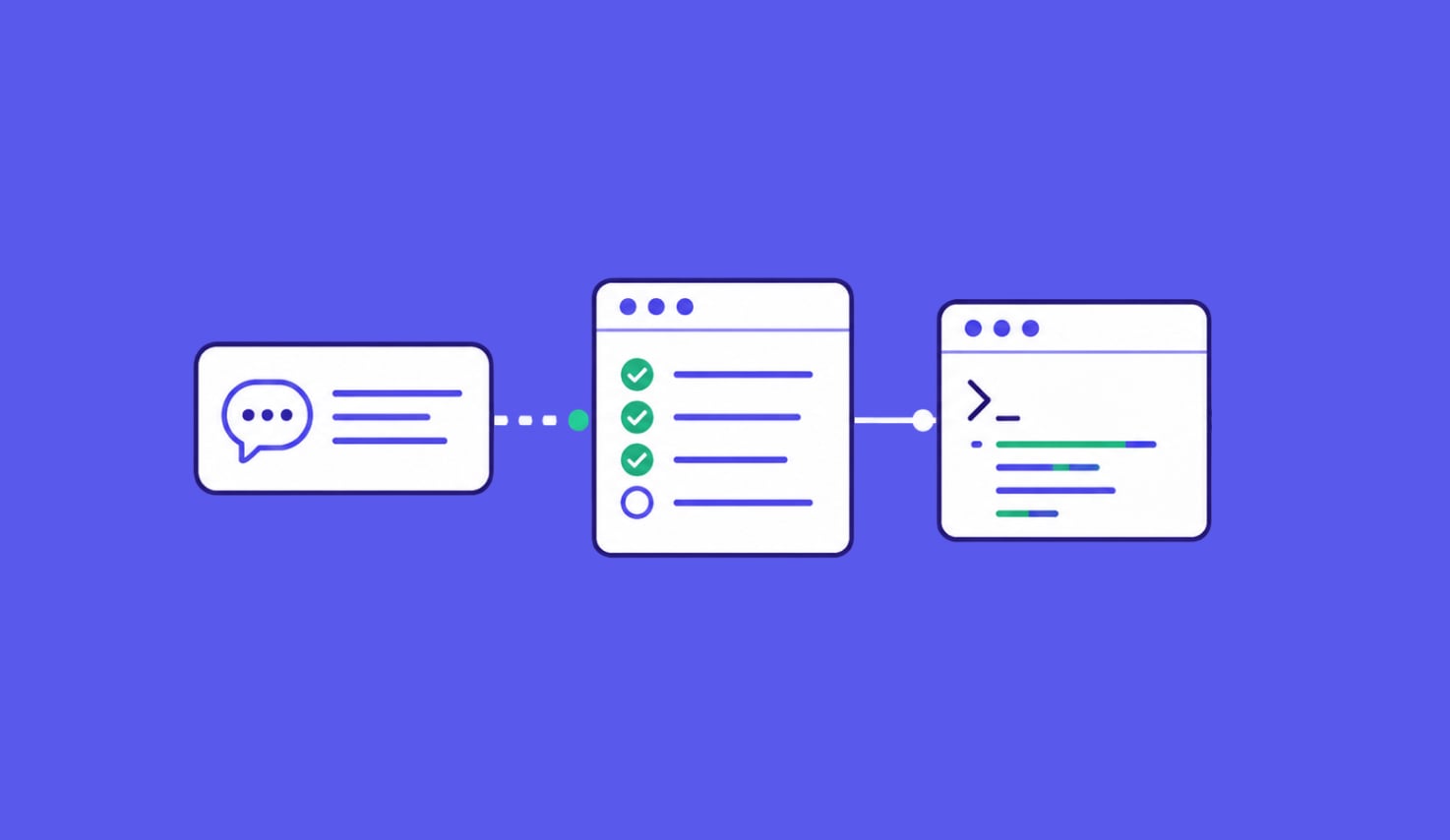
• A plain-language instruction becomes a runnable test through five stages: intent parsing, element resolution, step synthesis, execution, and self-healing when the application changes.
• In one industrial case study, 60% of generated scripts were usable as written, 8% needed edits of under two minutes, and the remaining 32% needed regeneration or were discarded.
• The dominant failure mode is not the model. It is missing context in the requirement the model was given.
Treat a generated test the way you would treat a first draft from a fast, capable engineer who has never seen your application: mostly right, occasionally confidently wrong, and always worth reading before it enters the suite.
What natural language test automation actually means
Three distinct capabilities travel under this label, and vendors rarely separate them. They are worth separating, because they carry different risks and fail at different moments.
Plain-language authoring. You describe the test in words, and the tool produces a script or a structured test artifact. The generation happens once, at authoring time, and what comes out is a normal test that you can read, review, and edit. When it gets something wrong, you find out in review, which is the cheapest possible place to find out.
NLP-based element identification. Instead of matching a fixed selector, the tool uses the language of the step and the context of the page to decide which element you meant. This runs at execution time, and it is what sits behind most self-healing test automation. It is the reason a test can survive a UI change that would have broken a hard-coded locator. It is also the reason a test can quietly heal to the wrong element and keep passing.
LLM agents executing steps at runtime. Here there is no compiled script. An agent reads the instruction on every run and decides what to do. This is the most flexible option and the least deterministic one, and it belongs to the broader shift toward agentic QA and autonomous testing.
| Capability | When it runs | What you get | Determinism | How it fails |
|---|---|---|---|---|
| PLAIN-LANGUAGE AUTHORING | Once, at authoring time | A normal test you can read, review, and edit | Same as any scripted test | Generates the wrong test. You catch it in review, which is the cheapest place to catch it. |
| NLP ELEMENT IDENTIFICATION | Every execution, per step | Tests that survive UI changes that would break a fixed selector | High, until the page changes | Heals to the wrong element and keeps passing. Silent, and the hardest of the three to notice. |
| LLM AGENT EXECUTION | Every execution, whole test | No compiled script. The agent decides what to do each run | Lowest of the three | The same test takes different paths on different runs. Useful for exploration, a problem for a regression gate. |
Most platforms combine at least two of the three. The useful question during an evaluation is not "does it support natural language" but "which of these three is doing the work, and at which moment." A feature page that says "natural language" tells you nothing about whether your suite will behave the same way twice.
For teams whose main goal is getting non-specialists authoring tests at all, the relevant comparison is usually against no-code test automation rather than against scripted frameworks.
How a plain-English instruction becomes a runnable test
The pipeline has five stages. Knowing where they sit makes it much easier to work out which stage produced a bad test.
1. Intent parsing. The model reads "log in as a standard user and confirm the dashboard loads" and decides what the discrete steps are, what counts as the assertion, and what has been left unsaid. This is where a vague instruction does the most damage, because everything downstream inherits the interpretation.
2. Element resolution. Each step has to be tied to a real element. The tool combines the words you used, the DOM, accessibility attributes, visible text, and often a visual read of the page to pick a target. Good implementations record several signals per element rather than one selector, which is what makes later healing possible.
3. Step synthesis. The parsed intent and the resolved elements are turned into an executable artifact: a script in a real language, or a structured step sequence the runner understands. This stage is now largely solved, which is a genuinely useful thing to know, and we will come back to why.
4. Execution. The test runs. If the platform uses runtime agents, interpretation happens again here, which is where non-determinism enters.
5. Maintenance. The application changes and the test has to adapt. The stored element signals get compared against the new page, and the step either heals or fails. This is where most of the long-term value of the approach actually sits, because test maintenance, not test creation, is what consumes a mature team's time.
How reliable is it, really
Two recent studies are worth reading in full, and together they draw a fairly clear line between what is solved and what is not.
An industrial case study published on arXiv in April 2025 evaluated a two-stage pipeline: user stories to Gherkin scenarios, then Gherkin to Cypress scripts. Across 50 generated test cases, 60% were usable exactly as written. Another 8% needed minor fixes that took under two minutes each. 24% had to be regenerated with additional context, and 8% were discarded outright. Every generated script was syntactically valid TypeScript, and the average cost was €0.12 per script. On the first stage of the pipeline, 95% of respondents found the generated acceptance tests helpful across 65 usage instances, and six product owners rated output quality at 8 out of 10.
The pattern in those numbers matters more than the headline. Syntax is solved: 100% of the scripts compiled. Semantics is not: roughly a third of them did not correctly represent the scenario they were generated from. A tool that produces clean, well-commented code that tests the wrong thing is a specific and slightly dangerous kind of useful.
The second study is more encouraging and more conditional. Research published in the Software Quality Journal in June 2026 looked at LLM agents executing natural language test cases against GUI applications, and reported under 1% false positives and under 4% false negatives. That is a strong result, and it held with locally deployable open-weight models in the 14 billion to 70 billion parameter range, which means it does not depend on sending your application under test to a frontier API.
The conditions attached to that result are the actual finding. It holds when test cases are non-ambiguous, when environmental issues are infrequent, and when the agent's scope for unpredictable behavior is constrained. In other words, reliability is not a property of the model. It is a property of the discipline around the model.
Where natural-language authoring breaks down
Ambiguity in the instruction. "Verify the user can check out" contains at least four unstated decisions: which payment method, whether the cart is pre-populated, what confirms success, and what happens to the order afterward. The model will resolve all four, silently and plausibly. If your team writes loose acceptance criteria today, natural language authoring will convert that looseness into tests rather than surface it.
Missing context in the source requirement. This is the largest single failure mode in the arXiv data: 12 of 40 observed errors traced back to insufficient context in the user story or Gherkin, not to the model's reasoning. The practical consequence is that this approach rewards teams with well-written requirements and punishes teams without them, which is close to the opposite of how it tends to be sold.
Environmental flakiness. An agent interpreting a page in real time is more sensitive to slow loads, unexpected modals, and stale test data than a compiled script with explicit waits, because it has to decide whether what it is seeing is a failure or a delay.
Non-determinism. If interpretation happens at runtime, the same test can take slightly different paths on different runs. For exploratory coverage that is a feature. For a regression gate that has to produce the same verdict twice, it is a problem, and it is worth asking any vendor directly how they pin execution for tests that need to be repeatable.
None of this makes the approach a bad bet. It does mean the honest framing is a shift in where the work goes, not a removal of it. You spend less time writing selectors and more time writing clear requirements and reviewing generated output.
What good review looks like
The teams getting real value here treat generation as a proposal rather than a result. Katalon builds this in deliberately: the Katalon AI Assistant orchestrates its agents on an "AI proposes, human approves" model, so a generated test arrives as something to approve, edit, or reject rather than something that silently joins your suite.
A workable review pass on a generated test asks five things:
- Does it test the behavior the requirement described, or a nearby behavior that was easier to generate?
- Is the assertion meaningful, or does it only confirm that a page loaded?
- Would this test fail if the feature broke? A test that cannot fail is worse than no test.
- Are the resolved elements the ones you would have chosen, particularly on pages with repeated components?
- Does it clean up after itself, or will it leave state that breaks the next run?
That is a few minutes per test, which is the honest cost of the approach and still a very good trade against writing the test by hand. It is also the part that no tool removes, and any vendor telling you otherwise is describing a product that does not exist yet.
This is also where the human judgment that has always mattered in QA keeps mattering. Planning what to test, deciding what risk is acceptable, and interpreting an ambiguous failure are not bottlenecks waiting to be automated. They are the work.
Choosing a tool that handles this properly
Four questions separate a real implementation from a demo:
- Which of the three capabilities are you actually getting, and at which stage does interpretation happen?
- Can you see and edit the generated artifact, or is it opaque?
- How does the tool handle a step it cannot resolve confidently: fail loudly, or guess?
- For tests that must be deterministic, how is execution pinned?
If you are still building a shortlist rather than evaluating a mechanism, our roundups of the best AI testing tools and automation testing tools cover the current landscape in more depth than a single conceptual piece can.
In Katalon Studio, plain-language authoring, AI-assisted element resolution, and self-healing sit in the same place as scripted authoring, so a team can generate a test from a description, read what came out, and drop into full code where the generated version is not good enough. That combination matters more than any single feature, because the realistic end state for most teams is not fully generated suites. It is generated first drafts, reviewed by people who know what the application is supposed to do.
The takeaway
Natural language test automation has moved from a marketing claim to a measurable capability, and the measurements are genuinely good on the mechanical parts. Generated scripts compile. Element resolution survives UI change. Execution accuracy, under controlled conditions, is high enough to trust.
What has not changed is where the judgment lives. The research is consistent on this: the failures cluster around ambiguous instructions and thin requirements, not around the model's ability to write code. Which means the teams who get the most out of this are the ones who were already writing clear acceptance criteria, and the fastest way to prepare for it is to improve the inputs rather than wait for a better model.
For the wider picture of how AI is changing testing beyond the authoring layer, start with our guide to AI testing.
|
FAQs
What is natural language test automation?
Natural language test automation lets you describe a test in ordinary language, such as "log in as a standard user and confirm the dashboard loads," and have a tool turn that description into an executable test. Depending on the platform, the interpretation happens once when you author the test, at runtime on every execution, or both.
How is it different from no-code or low-code testing?
No-code and low-code testing remove the need to write code, usually through a visual builder or a recorder, but you still assemble the test yourself step by step. Natural language authoring removes the assembly as well: you state the intent, and the tool proposes the steps. In practice many platforms offer both, and no-code test automation is often the better entry point for teams whose main constraint is that testers cannot code.
Is natural language test automation reliable enough for regression testing?
It depends on how the tool executes. Research published in the Software Quality Journal in June 2026 reported under 1% false positives and under 4% false negatives for LLM agents executing natural language test cases, but only when test cases were unambiguous and environmental issues were rare. For a regression gate that has to return the same verdict on every run, ask the vendor how execution is made deterministic, and prefer tools that produce an inspectable, repeatable artifact rather than re-interpreting the instruction each time.
How much of a generated test can I use without editing it?
In an industrial case study published in April 2025, 60% of generated test scripts were usable as written, 8% needed minor fixes taking under two minutes, 24% needed regeneration with additional context, and 8% were discarded. Every generated script was syntactically valid, so the editing burden fell on correctness rather than on making the code run.
What is NLP's role in test automation?
NLP appears in two places. At authoring time it parses your written intent into discrete, testable steps. At execution time it helps identify elements by interpreting the language of the step alongside page context, rather than relying on a fixed selector, which is the mechanism behind most self-healing behavior.
What is the most common reason a generated test is wrong?
Missing context in the source requirement, not a model error. In the arXiv study, 12 of 40 observed errors traced back to user stories or Gherkin scenarios that did not contain enough information to generate a correct test. Improving the clarity of acceptance criteria does more for output quality than changing models.