




There's a quiet frustration that lives inside most QA teams, and almost nobody talks about it out loud.
You know your product better than anyone. You can walk through a customer journey in your sleep. You spot a broken flow in seconds just by using the app the way a real user would. But the moment someone says "can you just automate that test?" the conversation shifts to a language you never had to learn.
Selenium. Locators. Frameworks. Script maintenance. XPath. Java.
And just like that, the person who understands the product most ends up contributing the least to automation. That's not a skill problem. That's an access problem. And it's one that's held back QA teams for years.
For a long time, the idea of no code test automation, where anyone on the team could run meaningful automated tests without touching a script, felt like a dream more than a reality. Until now.
Why Traditional Test Automation Feels Like a Wall
Let's be straightforward about something most testing tool vendors won't say: traditional automation was built for engineers, not for everyone.
Even a simple UI test, something like verifying a login screen works correctly, required writing scripts, managing locators, setting up frameworks, and then fixing everything again every time a developer changed a button label or renamed a field.
According to a Gartner Peer Community survey of 501 participants, lack of automation expertise on the team ranks among the top barriers to UI/GUI test automation, sitting right alongside tool costs and time constraints. And this is just for teams that already have automation engineers. For everyone else trying to figure out QA automation without coding, the barrier was even higher.
That tells a very specific story.
Manual testers, the people who actually know the product, who've filed hundreds of bug reports and written thousands of test cases, were effectively locked out of the automation process. They understood the business flows perfectly, but had no direct way to contribute to automation without depending on an engineer.
The result? QA teams got overloaded. Automation backlogs piled up. Regression cycles slowed down. And the people closest to the customer experience became the most bottlenecked.
This is exactly the problem modern platforms are beginning to solve, and it's the core reason the Katalon True Platform matters so much right now.
The People This Was Built For
Before we talk about the platform, let's talk about the people it's designed to serve. Because this matters.
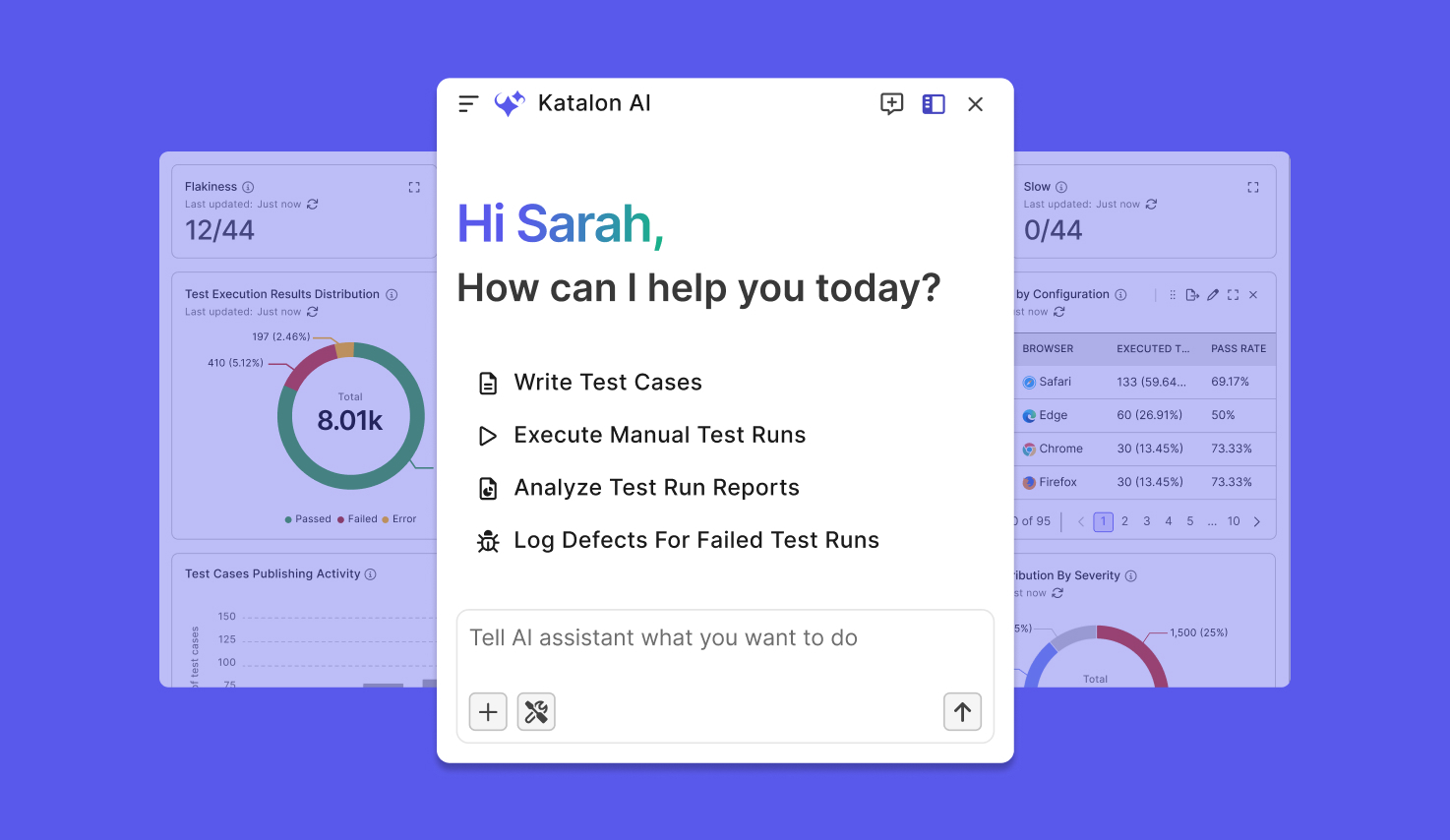
Sarah has been a QA analyst for six years. She knows her company's e-commerce checkout flow like the back of her hand, every edge case, every customer pain point, every place where things tend to break under pressure. She's written thousands of test cases in plain, clear English. But Sarah doesn't write code. She never needed to. When her team started talking about "automating the regression suite," her deep product knowledge suddenly felt invisible.
Or think about James, a product manager running user acceptance testing for a SaaS company. He can describe exactly what the product is supposed to do better than anyone. But running an automated check against it? That required a developer's calendar, a three-day wait, and a dependency he had no control over.
Sarah and James aren't exceptions. They're the majority of people involved in software quality. And until recently, the promise of no code automated testing was mostly marketing language, something that sounded great in a demo but fell apart in practice.
That's what's changing.
Introducing Katalon True Platform
In April 2026, Katalon officially launched the True Platform, an AI-native platform for software quality that brings together six purpose-built AI agents working together across the full testing lifecycle.
At the heart of this launch is a capability that genuinely shifts what's possible for non-technical testers: the Autonomous Test Runner.
Here's what it does, in plain language.
You write your test case the way you'd describe it to a colleague, in plain English:
"Go to the homepage. Search for a product. Add it to the cart. Apply a coupon. Complete the checkout. Verify the order confirmation screen appears with the correct order number."
That's it. No script. No framework. No locators. No code.
The Autonomous Test Runner takes that natural-language test case and executes it end-to-end, navigating the application, performing every step, capturing screenshots, recording evidence, and logging a detailed pass or fail result.
And when something breaks? The Bug Reporter agent automatically turns that failure into a complete defect report and can file it directly to Jira or Azure DevOps in one click.
This is what no code test automation actually looks like when it works as promised.
A Real-World Use Case: Automated Testing Without Writing Code
Let's bring this back to Sarah and walk through exactly how her day changes.
Before True Platform, validating the checkout flow looked like this: open the app, click through every step manually, note any issues in a spreadsheet, write up a bug report by hand, then hope an automation engineer had bandwidth to build coverage around it. On a good sprint, she'd cover 30-40 test cases. On a bad one, the week before a release, she'd be working late just to get through the basics.
With Katalon True Platform, here's the same scenario:
Step 1: She opens the platform and goes to her test case list. These are the same test cases she's always written, in the same natural language she's always used.
Step 2: She selects the tests she wants to run and clicks Execute. No setup required. No developer dependency. No waiting.
Step 3: The Autonomous Test Runner takes over. It opens the application, follows every step she described, captures evidence at each point, and logs a pass or fail with full context.
Step 4: If a test fails, the Bug Reporter generates the defect report automatically. It includes the exact step that failed, a screenshot, and everything a developer needs to reproduce and fix the issue. Sarah reviews it, clicks submit, and it lands in Jira.
Step 5: The Report and Insight Generator builds a release summary she can share with her release manager, covering what passed, what failed, and whether the build is ready to ship.
What used to take Sarah two full days now takes a couple of hours. And she didn't write a single line of code.
Why This Is Different from Record-and-Playback Tools
It's worth addressing something directly, because "no code testing" has been a buzzword for a while and most people have learned to be skeptical of it.
Previous no-code tools typically worked on the record-and-playback model. They recorded your clicks, generated a brittle script underneath, and broke the moment anything on the UI changed. The "no code" part was technically true, but the maintenance burden just moved somewhere else. You weren't writing code; you were endlessly re-recording tests instead.
The Autonomous Test Runner works differently. It doesn't record clicks: it reads intent. It interprets a test case written in natural language and executes it the way a skilled tester would, adapting as it navigates the application. When the UI changes, it doesn't break. It adjusts.
That's the difference between a recorder and an agent.
And it's why no code test automation, when built the right way, doesn't just make things more convenient. It makes automation genuinely scalable across teams, skill levels, and roles. When organizations distribute testing responsibilities to more people, test creation moves faster, maintenance workload reduces, coverage expands without adding headcount, and release confidence improves at every level.
Quality stops being a bottleneck and becomes a shared habit.
Why This Goes Beyond Just Saving Time
There's something more significant happening here than efficiency gains.
Coverage improves. When more people can run tests, more tests get run. Edge cases that got skipped because "there wasn't time to automate that" now get covered by the people who know them best.
Feedback cycles get faster. Instead of waiting for an automation engineer to have bandwidth, product teams can validate workflows earlier, right when they need to.
Business scenarios get better coverage. Non-technical users like Sarah often identify the real customer scenarios more accurately than scripted technical test cases. They think like users, not like code.
QA engineers get their time back. When the repetitive execution and maintenance work is handled autonomously, automation engineers can focus on higher-level testing strategy, complex edge cases, and architectural decisions, the work that actually needs their expertise.
The QA role evolves, it doesn't disappear. Sarah doesn't get replaced by the Autonomous Test Runner. She gets amplified by it. Her knowledge of the product becomes the input; the AI handles the execution. That's not automation replacing testers. That's testers finally being given tools that match their real value.
This shift is also part of a broader shift-left testing movement, where quality work moves earlier in the development cycle rather than piling up at the end.
The Six AI Agents Working Together
The Autonomous Test Runner doesn't work in isolation. It's one piece of a connected system of six AI agents that share context and work together across the full testing lifecycle.
This connected context is what makes the True Platform genuinely different. When one agent acts, the others already have the information they need.
The Requirement Analyzer reads your requirements, spots ambiguities early, and maps out a test plan before a single test case is written. It catches gaps at the source, not after.
The Test Case Generator takes those requirements and generates full test coverage automatically, including edge cases and negative scenarios that manual writers often miss.
The Autonomous Test Runner executes natural-language test cases end-to-end, without any scripting, framework setup, or automation expertise required.
The Bug Reporter turns every test failure into a complete, structured defect report and submits it directly to Jira or Azure DevOps in one click.
The Report and Insight Generator builds release-ready summaries and custom reports from plain-language descriptions, giving QA leads and release managers a clear go/no-go picture.
The Root Cause Analyzer goes beyond reporting failures. It identifies why tests failed and recommends the right fixes, cutting triage time significantly.
All six are orchestrated by the Katalon AI Assistant, which acts as the connective layer across the lifecycle. The Test Case Generator creates a test; the Autonomous Test Runner already knows how to execute it. A test fails; the Bug Reporter already has the evidence. The Root Cause Analyzer finds a pattern; the Insights Generator factors it into the release recommendation. These aren't six separate tools bolted together. They're six agents that understand the full picture.
You can read more about how the Katalon AI Assistant coordinates this workflow in our deep-dive on the AI Assistant.
Who This Platform Was Built For
The Katalon True Platform supports no-code, low-code, and full-code automation. Engineers who want to write scripts can. But the real shift is that now they don't have to for every test.
Manual testers with years of product knowledge are the clearest winners here. If you've spent your career writing test cases in plain English and watching automation happen somewhere else, you now have a direct path to contributing. Your knowledge of the product is the input the platform needs.
Business analysts who write acceptance criteria every single day will find that those descriptions can become the tests themselves. The gap between "what the product should do" and "what gets tested" closes significantly.
Product managers running UAT cycles no longer need to wait for engineering bandwidth to run automated checks. The dependency on a developer's calendar for basic validation is gone.
QA leads at smaller companies without a dedicated automation engineer can now have the whole team contribute to automated coverage. Low-code and no-code test automation tools have long promised this, but the True Platform is the first to deliver it without a hidden scripting requirement underneath.
Enterprise QA teams looking to scale coverage without scaling headcount proportionally will find the platform designed for exactly that problem.
Everyone who knows the product gets a seat at the automation table.
The Future of Testing Is Already Here
Software testing has been talking about democratizing quality for years. Most of the time, it stayed a talking point.
What the Katalon True Platform represents is a genuine shift, not in what's promised, but in what's actually delivered. The combination of natural-language test execution, connected AI agents, and autonomous workflows finally closes the gap between the people who understand the product and the people who can test it.
As AI accelerates how software gets built, producing more code, more changes, and less time to verify, the only sustainable answer is a testing platform that can keep up. Automated testing for non-technical teams isn't a nice-to-have anymore. It's the only way quality keeps pace with development velocity.
For everyone like Sarah and James who've spent years knowing exactly what needed to be tested but never having the tools to test it themselves, that answer is here now.
Ready to See It for Yourself?
If you've ever written a test case in plain English, you already know how to use the Autonomous Test Runner. Start with the test cases you already have. Write them the way you've always written them. Let the AI handle the rest.
Try Katalon True Platform free, no credit card needed. No scripting. No automation expertise required. Just your knowledge of the product, and a platform smart enough to act on it.

|
