



Your Manual Tests Are Already Automation
Learn with AI
X (Twitter)
Learn with AI
Here's the idea I want to leave you with. Your manual test library isn't documentation. It's automation that has been waiting for something that can read it. And you shouldn't have to move it, rewrite it or migrate it to set it free.
The clearest version of this came up in a customer conversation a few weeks ago. The head of quality at a fast-growing fintech told me his company pays an outside firm to run its manual regression, and the firm bills per test executed. Because strangers run the tests, every test case has to be written in extraordinary detail: every click, every field, every expected result.
He had already worked out the next part himself. Test cases detailed enough for a stranger to follow are exactly the kind an AI agent can pick up. And if an agent could run them, that per-execution bill was money he could stop spending.
He's right. And his situation is a lot more common than it looks.
The short answer
How AI changes what a manual test is, at a glance:
- The idea: a manual test written in natural language is already something an AI agent can run. There's no separate automation project.
- The first run: the agent reads the test as written, works through it in the application, checks the expected result and keeps a record of what it did.
- Behind the scenes: that first run becomes an automated test, so next time the agent runs it from there instead of the natural language steps.
- What doesn't run: tests that are vague, out of date or rely on a veteran's knowledge won't go through cleanly, which shows you exactly where a human is needed.
- Where to start: the tests your team runs by hand every release, written clearly enough for a new hire.
Your manual test library is closer to an asset nobody has cashed in yet than a cost of doing business.
The Translation Tax
Every mature testing team owns a library like his. Hundreds or thousands of test cases in a test management tool, a spreadsheet or Jira. Written, reviewed and rewritten over years. It describes what the product is supposed to do better than almost any other document in the company.
And most of it has never been automated. Not because nobody wanted to, but because automation has always needed a translation step. A skilled engineer reads the test case, then rewrites it as code. That translation is slow, it needs scarce skills, and you pay for it again every time the code breaks. Call it the translation tax.
Teams pay it selectively. The critical flows get translated. The long tail stays manual forever, and people run it by hand every release. That's what I mean by trapped. The knowledge is all there, sitting one translation away from running on its own.
Automate by Running, Not Rewriting
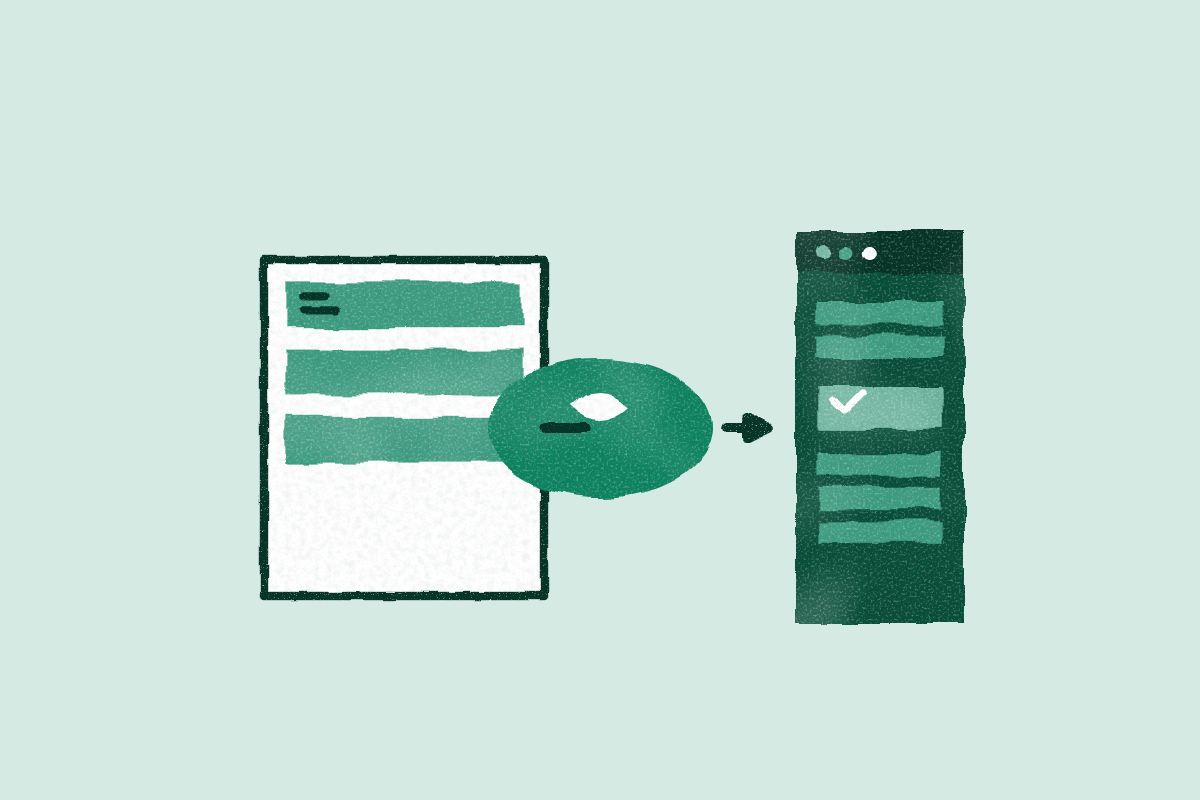
What's changed is that the translation can now be done by the thing doing the running. An AI agent can read the test case as written, work through it in the application, check the expected result and keep a record of what it did. The first run is the automation.
Next time the same test needs to run, it runs based on the automated test generated by the AI agent and not the natural language steps in the manual test case.
That flips how teams approach an old manual suite. The traditional way is a project: prioritize, estimate, staff it, convert a few hundred tests a quarter, and hope the app doesn't change underneath you. The new way is closer to a habit. You run the tests you would have run anyway, and each run leaves automation behind.
| Aspect | The traditional way | The new way |
|---|---|---|
| Approach | A project | Closer to a habit |
| What it takes | Prioritize, estimate, staff it, convert a few hundred tests a quarter | Run the tests you would have run anyway |
| Result | Hope the app doesn't change underneath you | Each run leaves automation behind |
Not every test will go through cleanly the first time. Some are vague, some are out of date, and some assume knowledge only a veteran tester has. That's useful too. The tests that don't run tell you exactly which ones need a human's attention, instead of leaving you to guess across the whole library.
You Shouldn't Have to Move It to Free It
This is the part I'd push back on hardest. A lot of modernization advice starts with a migration: move your test cases into a new tool, restructure them, retrain the team, and then start automating. For a large library, that's months of work before a single test runs on its own. Plenty of teams never get past step one.
It doesn't have to go in that order. If an agent can read a test case, it can read it where it already lives. The library stays in the tool your team knows, with its history, its links to requirements and the habits built around it. Automation starts on day one.
We keep hearing the same thing in customer conversations. The teams most excited about this aren't the ones with clean, modern test suites. They're the ones sitting on thousands of manual cases they had quietly given up on.
Where I'd Start
If you want to try this on your own library, don't start with the whole thing. Start with the tests your team runs by hand every single release, because those pay the translation tax most often. Within those, pick the ones written well enough that a new hire could run them without asking anyone. Those are the ones an agent will handle best on day one.
Then follow the money. If you're paying people, in-house or outsourced, to run the same steps every release, that's the time and budget this gives back. Decide now what your testers would do with it, because the answer is the real business case.
For years, a manual test library has been treated as a cost of doing business. I think it's closer to an asset nobody has cashed in yet. The teams that notice first are going to have a very good year.
Frequently asked questions
Do I Need to Automate My Manual Tests Before an AI Agent Can Run Them?
No. An AI agent can read a manual test case written in natural language, work through it in the application, check the expected result and keep a record of what it did. The test you already have is the starting point, with no translation into code first.
What Happens After the First AI Run of a Manual Test?
The agent turns that first run into an automated test. The next time the same test needs to run, it runs based on that automated test rather than the natural language steps in the manual test case. The first run is the automation.
What Happens When a Manual Test Is Too Vague for the AI Agent?
It won't go through cleanly. Tests that are vague, out of date or rely on knowledge only a veteran tester has tend to fail first. That's useful: it shows you exactly which tests need a human's attention, instead of leaving you to guess across the whole library.
Which Manual Tests Should I Start With?
Start with the tests your team runs by hand every release, because they cost the most time over and over. Within those, pick the ones written well enough that a new hire could run them without asking anyone. Those are the ones an agent will handle best from the start.
Do I Have to Migrate My Test Library First?
Not as a first step. A migration project, moving, restructuring and retraining before anything runs, can take months for a large library. Start with a small set of tests you already run by hand and learn what works before planning anything bigger.
Can This Reduce Outsourced Manual Testing Costs?
It can for tests an outside firm runs every release, especially when they are already written in step-by-step detail for people unfamiliar with the application. Those are exactly the kind an AI agent can pick up, so compare the effort of running them with AI against the per-test bill.
|