




Cypress and Katalon both promise to make browser testing easier, but the two tools start from very different points and serve different kinds of teams. Cypress tests are stored as JavaScript or TypeScript, and Cypress Studio plus cy.prompt add visual and natural-language authoring on top of that code.
Katalon True Platform is a unified quality engineering platform built around Katalon Studio for authoring tests across web, mobile, API, and desktop apps. Test management, execution, and production-insight capabilities sit on top of Studio for teams that need release-level traceability as they scale.
If your team is choosing between the two, or already runs Cypress and is wondering what a broader platform adds, this guide compares where each tool wins. It also covers the real gaps in both platforms, current pricing for each, and how real users rate them today on both G2 and Capterra reviews.
Katalon advantages for enterprise QA teams

Katalon's advantage starts with breadth across test types, and it carries through to how the platform governs testing once a test is written. Teams get one connected workspace instead of stitching together several separate point tools for web, mobile, API, and desktop test coverage.
- Katalon Studio: Katalon Studio is one IDE for building automated tests across web, mobile, API, and desktop applications, with low-code and full-code authoring together. Manual testers build tests visually with record-and-playback, while automation engineers extend tests with Groovy scripting and custom Java libraries. Studio also self-heals object locators: when a UI change breaks one, it tries other known locators, then falls back to AI matching and suggests a fix.
- Katalon True Platform: Katalon True Platform is Katalon's unified quality engineering platform for planning, authoring, executing, and analyzing testing in one workflow. Studio is the test-automation piece of it; TestOps, TestCloud, and TrueTest add test management, execution, and production insights on top of it. Together they bring requirements-to-release traceability across the workflow, plus human approval gates specifically for AI-generated test writes. This matters for teams that must show what was tested, what an AI agent generated, and that a person reviewed it before it shipped.
- Unified reporting and execution: TestOps centralizes reporting and flaky-test detection at the project level by default, and it adds requirement traceability on top of that. Eligible teams can configure cross-project dashboards in TestOps once they need visibility that spans more than a single project or test suite. TestCloud gives on-demand access to a large library of real browsers, devices, and OS versions, so cross-browser coverage needs no grid of your own.
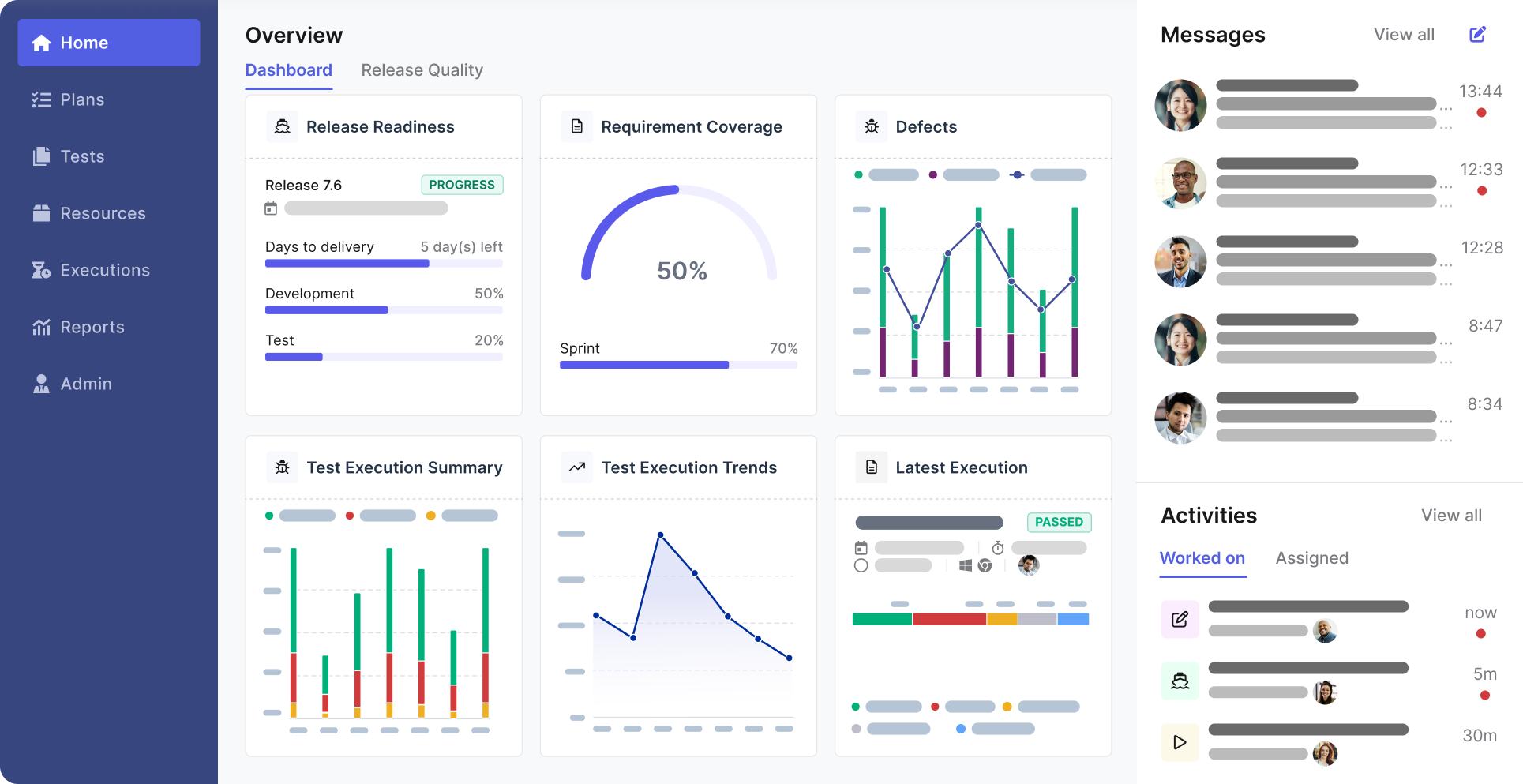
Because the platform is priced modularly, teams can start with just Katalon Studio for automation and add more capability only when they need it. They can layer on full test management and cloud execution capability once they need governance across a mixed manual-and-automated test suite. That point usually arrives once testers, automation engineers, and release managers are all touching the same test cycle, and nobody alone has the full picture.
Cypress advantages

Cypress earned its popularity by solving a real problem well: testing web apps the way developers already think about and write code every day. It also gives non-coders a way in: Cypress Studio and cy.prompt provide visual and natural-language authoring for that same team.
- Runs inside the browser, not alongside it: Cypress executes directly in the same run loop as the application under test, unlike tools that drive the browser from outside that process. That is what makes its time-travel debugging, automatic waiting, and real-time reloads possible without any extra configuration on your part. Cypress automatically retries assertions and re-queries the DOM until they pass or time out, removing the need for most manual wait statements.
- Two ways to author a test: Developers can write Cypress tests directly in JavaScript or TypeScript, using commands like cy.get() and cy.contains() in their own editor. Cypress tests are always stored as JavaScript or TypeScript files, no matter whether a developer writes them or someone records them instead. Cypress Studio and cy.prompt provide visual and natural-language authoring, watching the screen during a recording and suggesting assertions to add. Advanced customization and debugging in those recorded or generated tests may still require real JavaScript or TypeScript expertise from someone.
- Free and open source: The Cypress App itself is MIT-licensed and completely free to run locally, at any scale, with no seat limits or usage caps at all to worry about. Cypress Cloud, a companion service with free and paid tiers, adds parallelization, test replay, and analytics dashboards on top of the free app.
- Component testing: Cypress can mount and test individual UI components in isolation for frameworks like React, Vue, Angular, and Svelte, not only full pages end to end. That component-level testing suits teams that want unit-level confidence on individual UI pieces, separate from a full end-to-end page test.
- A growing set of built-in AI features: Cypress ships a growing set of AI capabilities directly in the product itself and inside Cypress Cloud, right alongside your existing tests. These features generate tests from plain-English descriptions, suggest assertions during recording, and summarize why a test failed in plain language. Cypress updates these AI features frequently, so see Cypress's AI features documentation for what is currently generally available versus still in beta.
Teams that are JavaScript-fluent, test only web applications, and are comfortable owning their own CI setup often find Cypress is all they need. Cypress Studio and cy.prompt extend that same reach to non-coders on the team, through visual and natural-language authoring.
Pricing: what to check before you compare
Both vendors' plans and terms can change at any time; the tier details below were checked directly on each vendor's own pricing page in September 2026.
Cypress publishes its pricing openly on its own pricing page, and the Cypress App itself is free forever and fully open source for anyone to use. Cypress Cloud, a companion service with free and paid tiers, scales by test results and by seats, up to a custom-priced Enterprise plan tier.
Katalon publishes self-serve, online pricing on its own pricing page, with separate options for individual automation testers and small teams alike. Those small-team options cover teams that need both test automation and test management together, plus separate options for larger organizations.
Katalon's Enterprise tier is the one that adds SSO, SCIM provisioning, role-based access control, and audit logs, confirmed on the pricing page today. Exact plan names and entitlements can shift as Katalon's packaging changes, so treat these details as a starting point and confirm them on the pricing page.
The two vendors price on different axes: Cypress by test results and seats, Katalon by seat type, so list prices are not directly comparable. Request quotes from both vendors using the exact same assumptions: team size, expected execution volume, and the test environments you need covered. That kind of apples-to-apples comparison is the one that will still hold up and stay accurate by the time your team is ready to actually buy.
Katalon considerations
- Right-size the platform: Deciding how much of the platform you actually need, just Studio, or Studio plus test management and execution, is worth sizing correctly up front. Developers who live entirely in code may find Katalon's low-code authoring model less direct than writing Cypress tests in their own editor. That said, Studio still supports full scripting in Groovy for anyone on the team who prefers to write tests as code rather than record them.
- More than a single-app tool: Teams evaluating Katalon purely as a testing tool for a single web application may well find it is more platform than they currently need it to be. Katalon's breadth becomes the real advantage once you also need mobile, API, or desktop coverage, or governance across a larger, mixed team.
- Governance sits behind higher tiers: Advanced governance and security capabilities sit behind Katalon's higher-priced tiers rather than the self-serve entry plans available right now. Confirm exactly what is included at each pricing tier directly on the pricing page before you budget for any governance or security features.
Cypress gaps you need to consider
- Web-only scope: Cypress's tight focus on web JavaScript and TypeScript testing is also exactly where its real limits sit for larger testing organizations today. It cannot automate native mobile apps or desktop applications directly, so any team that needs that coverage must bring in a second tool too.
- Governance and traceability gaps: Cypress Studio and cy.prompt provide visual and natural-language authoring for non-coders on a given team, though advanced work may still require JS/TS. Requirements-to-release traceability and the specific approval workflow that Katalon offers are not native to the free Cypress App, though Cypress Cloud does add org-level roles, qualifying-plan SSO, Test Replay, and analytics.
- Shared visibility and multi-tab limits: Teams need Cypress Cloud or some third-party integration to get that kind of shared visibility across an entire test suite, not just one run. Cross-origin flows are supported through cy.origin(), but native multi-tab or multi-window control is not supported in Cypress at all today.
- Electron deprecation: Teams that need multi-tab control typically rely on a community plugin workaround instead, since Cypress does not offer that control natively yet. With Electron now deprecated on Cypress's own public roadmap, teams relying on it should plan a migration to Chrome or another supported installed browser.
What real users say: G2 and Capterra ratings
As of September 18, 2026, both platforms' current ratings were checked directly on G2 and Capterra to confirm every figure below is accurate today. On G2, Cypress currently scores 4.7 out of 5 stars from 108 reviews, and on Capterra it scores that same 4.7 from 67 reviews as of this writing. Katalon currently scores 4.4 out of 5 stars on both G2 and Capterra, drawn from a much larger pool of published reviews than Cypress has today.
Katalon's rating is built on roughly 226 G2 reviews and 706 Capterra reviews, several times the size of Cypress's current review base today. That larger base gives Katalon's score more data points to draw on overall, though review count alone never explains why the two ratings differ.
Both figures above are simply a dated snapshot in time, since ratings and review counts on both sites naturally shift and change over time too. It is worth reading a sample of recent reviews on both sites directly if review substance, not just the star average, matters to your final call.
Katalon vs Cypress: side-by-side comparison
| Category | Katalon | Cypress |
|---|---|---|
| Automation approach | Low-code and full-code in one IDE (Katalon Studio) | Tests are stored as JavaScript/TypeScript; Cypress Studio and cy.prompt provide visual and natural-language authoring on top |
| Supported testing types | Web, API, mobile, desktop | Web and component testing; API testing via cy.request, not a dedicated module |
| Execution environment | Runs via a driver/automation layer; TestCloud provides on-demand cross-browser and device cloud | Runs directly inside the browser process for fast feedback and time-travel debugging |
| Governance and traceability | Katalon True Platform brings requirements-to-release traceability, with human approval gates specifically for AI-generated test writes | Cypress Cloud adds org-level roles, qualifying-plan SSO, Test Replay, and analytics; requirements-to-release traceability and that specific approval workflow are not native |
| Who can contribute | Manual testers and automation engineers, in the same workspace | Primarily developers; Cypress Studio and cy.prompt provide visual and natural-language authoring for non-coders too, though advanced work still needs JS/TS |
| Mobile and desktop support | Native, from the same platform used for web and API | Not supported; a separate tool is needed |
| AI capabilities | AI agents across the workflow: test generation, self-healing locators, bug reporting, root cause analysis | Natural-language test generation, AI-assisted assertion suggestions while recording, and plain-language failure summaries in Cypress Cloud; see Cypress's AI features documentation for current beta/GA status |
| Pricing model | Self-serve, published, priced per seat type; see katalon.com/pricing for current tiers | Free open-source app; Cypress Cloud is a companion service priced by test results and seats, up to a custom Enterprise plan |
| Ecosystem and community | Large ecosystem, active community, extensive resources | Very large JavaScript community, extensive plugin ecosystem for web-specific needs |
| G2 / Capterra rating (Sep 2026) | 4.4 / 4.4 (226 / 706 reviews) | 4.7 / 4.7 (108 / 67 reviews) |
The bottom line
Cypress and Katalon are not really competing for the exact same job, so the choice usually comes down to scope rather than raw feature count. Cypress is a fast, free way for JavaScript-fluent teams to test a web app, and Cypress Studio and cy.prompt open that same authoring to non-coders too.
Katalon is a platform for teams that need to cover more than just the web, or involve more than only developers on the harder testing cases. It also fits teams that need requirements-to-release traceability, plus human approval gates for AI-generated test writes, as the team and the suite grow larger.
Choose Cypress if your team is JavaScript-fluent, testing only web applications, and comfortable owning its own CI and cross-browser setup today. Choose Katalon if you need mobile, API, or desktop coverage alongside web, or want manual testers and automation engineers on one shared platform. Katalon also fits teams that need requirements-to-release traceability, with a human approval gate specifically for AI-generated test writes.
Some teams run both tools together, since Cypress handles fast, developer-owned web checks closest to where the code itself is being written. Results can be exported as JUnit XML into Katalon TestOps for centralized reporting, though this is an indirect path, not a first-party integration. Validate how test names and other metadata map over during a pilot before relying on that path for anything like governance-level traceability.
Either way, validate the specifics that matter most to your decision, platform coverage, who needs to author tests, and total cost, with each vendor.
If you're weighing more than these two tools, compare Cypress against Playwright, or browse other Cypress alternatives, for a wider view of the field. See Katalon in action with a personalized demo, and explore firsthand how the platform could fit into your team's own testing workflow today
|
